Two donkeys go on a Sunday outing and learn about rules.
Rules are an interesting thing, aren't they?
‘No parking here, please.’
‘No entry.’
‘Stop at red lights.’
We all know how it is. We read it. We weigh it up. And secretly, our little compliance department kicks in: Is anyone watching?
If not, ‘no entry’ quickly becomes ‘flexible depending on the situation’.
At least, that's the cultural conditioning that two donkeys bring with them when they set off on a harmless coastal excursion on a Sunday from their current place of residence.
The sign
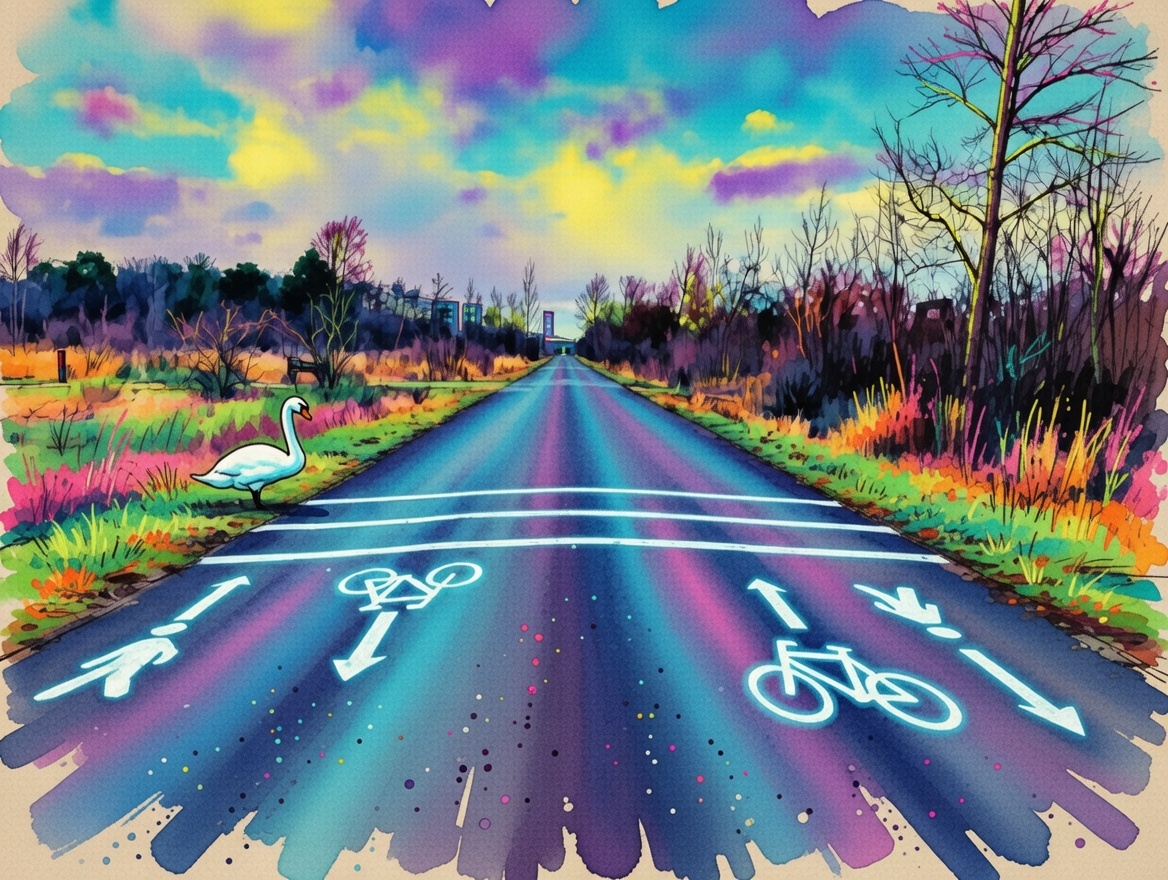
The path is relatively narrow, with the sea on the left, countryside on the right, and between them the idea of an ideal world. And then there is this sign, a pictogram on the ground.
Pedestrians walk forward on the left, in the opposite direction on the right.
Cyclists ride forward in the middle on the right and in the opposite direction in the middle on the left.
You look at it twice.
It sounds like the instructions for a Scandinavian board game that you can only win if everyone plays along.
One of the two donkeys – the one on the saddle – thinks: Oh, come on.
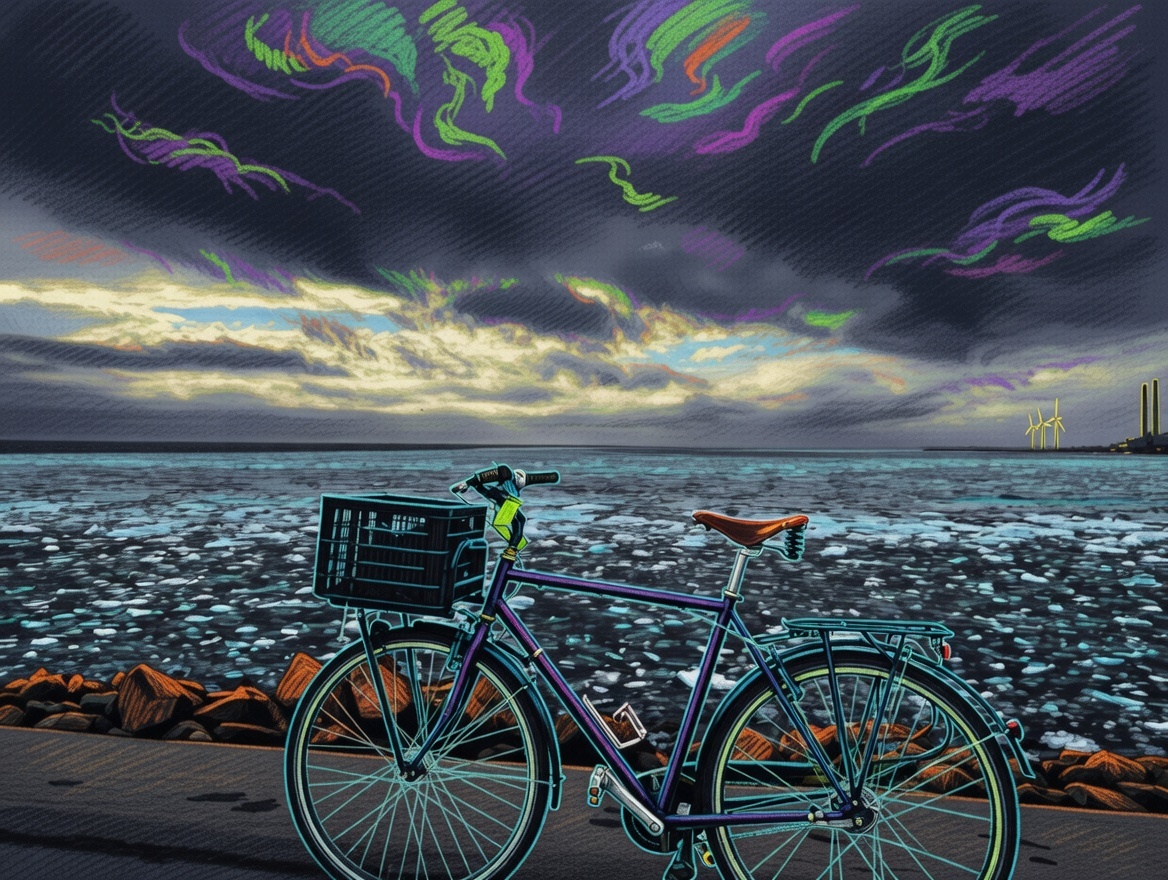
The other donkey – an old city bike with a slightly damaged frame and a voluminous basket as special equipment – says nothing, because bicycles rarely intervene.
So the sign is initially understood as a friendly suggestion.
As long as there is little traffic
At first, it works wonderfully. There are hardly any people around. You ride as you normally would. You give way generously when someone comes along, feeling almost noble in the process.
But then the sun comes out. And with it, the others.
Suddenly, the coastal path becomes a Sunday stream. People, bikes, prams, joggers in ambitious heart rate zones.
One donkey reacts instinctively and generously: Pedestrians ahead? Then just move your bike to the middle.
Except that everyone else is already there.
Everyone rides in the middle.
Forward on the right. Opposite on the left.
Pedestrians on the outside. Forward on the left, back on the right.
No chaos. No ringing bells. No indignant shrugging of shoulders.
It seems almost uncannily natural.
Crazy logic
What initially sounded stuffy – this precise division, as if drawn with a set square – suddenly makes sense.
If everyone knows where they belong, no one has to jump abruptly to the side.
If everyone has the same idea of “right” and “left”, cramped space becomes spacious.
Before, in drizzling rain and with little traffic, a rule violation would not have bothered anyone. But who wants to set standards in the rain? Rules rarely show their value when things are quiet. They prove their worth when it gets busier.
One inevitably thinks of the discussions one knows from home.
That this or that rule is excessive.
That it restricts freedom.
That it is only meant for exceptional cases and is not really useful to anyone.
And that one should be able to decide for oneself how to use a path.
Here, people seem to be considering something else:
How can we best get through this together?
Not heroically. Not ideologically. Simply practically.
Headwind and insight
The 15 kilometres of headwind contribute to inner reflection. The donkey on the saddle is pretty exhausted at some point. The donkey beneath him – basket bravely in the wind – is too.
But there is the other direction.
15 kilometres of tailwind.
And suddenly everything is easier. Pedalling, thinking, accepting that a sign does not always mean mistrust, but sometimes coordination.
At the end of this Sunday, the two donkeys know one thing above all else:
Rules are unpleasant when they are understood as a vote of mistrust.
And surprisingly pleasant when you realise that they simply help to ensure that no one is pushed into the sea.
You don't have to love them.
It's enough to use them together.