On realists, rose-tinted glasses and the attempt to find something to complain about

At last.
We’ve made a firm resolution:
So far, all the reports from Copenhagen… have been positive. There’s always something we like. Something that inspires us. Something that – let’s face it – seems better than back home.
That can’t be right.
That’s what they call rose-tinted glasses. They have to go.
So a week ago, a clear instruction was issued to the family:
Collect everything you don’t like here. Everything that’s worse than in Berlin. Otherwise we’ll lose credibility.
The result?
Well, yes.
Unsatisfactory.
In some cases a bit… far-fetched.
But never mind. We’ll deliver.
Prices – or: Welcome to the North
Copenhagen is expensive.
Not just a little.
But noticeably so.
At the supermarket: it feels like 20–30 per cent more.
In restaurants: more like 30–40 per cent.
The flat: also significantly more expensive.
Actually: everything.
So we start doing things we’re used to from Germany – only with more determination:
We hunt for bargains.
Because they’re actually worth it here. When something’s on offer, it’s properly cheap.
And when we go out for a meal, we end up at the IKEA restaurant surprisingly often.
Not just because it’s nearby. But also because it’s good and cheap.
So Saturday is now… IKEA day.
You make do.
And at the same time, you wonder:
How do the others actually manage?
The answer seems to be: quite relaxed.
Perhaps it’s down to income. On average, around 40,000 kroner a month – that’s about 5,000 euros. In Germany, it’s slightly less at 4,500 euros. All gross, of course.
And perhaps it’s also down to the distribution.
With tax rates exceeding 50 per cent, things are apparently distributed a bit more evenly.
Milk – the quiet morning crisis
And then there’s the milk.
An unassuming product that suddenly becomes a topic of discussion.
The milk here goes off surprisingly quickly. Much faster than we’re used to in Germany.
Why exactly? Probably different processing methods, a different shelf life, perhaps also less ‘optimisation’ for long-term storage.
Is that better?
Possibly.
Is it practical at breakfast in the morning?
Not really.
When your coffee suddenly takes on a slightly philosophical aftertaste, you realise:
Even progress has its limits.
Wind – the honest force of nature
Then there’s the wind.
It’s almost unfair to mention it, because it’s hard to criticise.
But: it’s windy.
And it loves to be.
Particularly impressive: days when, whilst cycling, you feel as though you’re facing a headwind in both directions.
Physically explainable? Perhaps.
Emotionally hard to convey.
You just accept it.
You pedal a bit harder.
Road behaviour – this time on two wheels
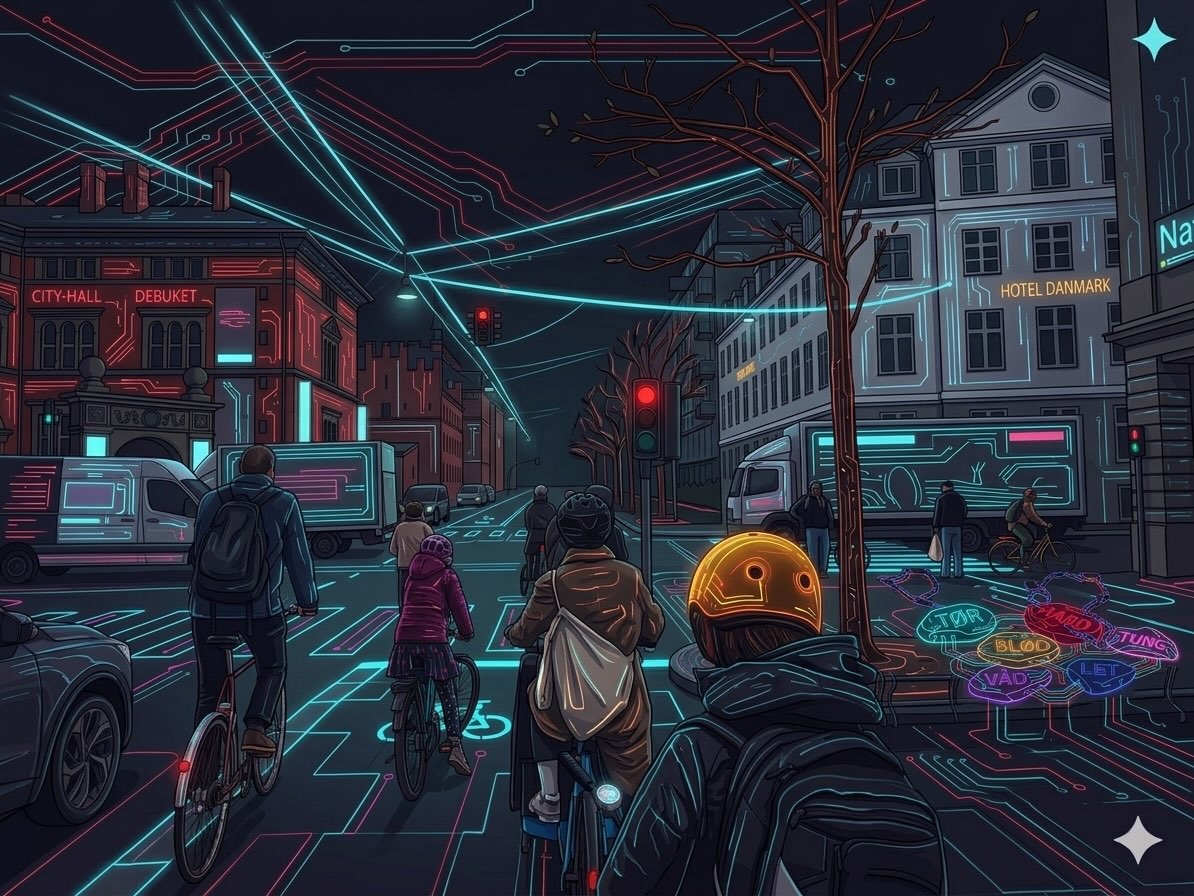
And now it gets interesting.
We’ve already mentioned how surprisingly polite motorists are.
That’s still the case.
But: there’s the other side to it.
The cyclists.
And because almost everyone here cycles, you find… the whole of society on the cycle paths.
The classic type is present here too:
The egoist.
Previously in a BMW, speeding through a red light.
Here on a slightly rickety Dutch bike. But with the same inner drive: I’ve got to get through there now.
Then there’s the mum in the SUV – only this time on a motorised cargo bike.
Big, fast, determined. 26 km/h, and you can tell: this isn’t a Sunday stroll.
And of course the impatient ones.
Who push their way to the front at the traffic lights.
Very quietly. Very calmly. But determinedly.
What we see on four wheels back home happens here on two.
Only: more quietly.
And, on the whole, surprisingly civilised.
But still: human.
Mopeds – the unexpected passengers
The cycle lanes are wide.
Very wide.
So wide that mopeds can fit on them too.
And – surprise, surprise – they’re there.
With yellow number plates, which means: allowed.
This leads to situations where a delivery moped squeezes in next to a cargo bike, whilst you yourself are trying to stay reasonably steady in your lane.
Not dramatic.
But… let’s say: noticeable.
Roads without cycle lanes – the exception as a problem
They do actually exist: roads without cycle lanes.
Not many. But enough to stand out.
And something interesting happens there.
Car drivers seem… irritated.
Normally, cycle lanes here are clearly separated, often even raised. Everyone has their own space. Everything is clear-cut.
And then suddenly: one road, one space, one white line.
Whilst in Germany car drivers now often give way generously, here they tend to drive past rather closely.
Our theory:
People are simply not used to sharing the space.
Unfriendly foreigners
And then there’s the issue of friendliness.
So far, we’ve… hardly met any unfriendly people.
I mean, really: almost none.
Well, actually. There were a few.
And interestingly, they were all clearly not Danish.
There are lots of expats living in our neighbourhood. Lots of Germans, too.
And there you see something you’d almost started to miss:
the ability to view things critically.
Or let’s say: to find fault with them.
You can observe this live in local Facebook groups.
Example: A new café is opening soon. Serving German cakes.
The Danes’ reaction:
“Wow, brilliant!”
A German comment:
“It’s not possible to bake an authentic Black Forest gateau in Denmark. Essential ingredients are missing. It’s bound to fail.”
For a moment, you feel right at home.
Conclusion – with lingering doubts
So there you have it: our list of criticisms.
Prices. Milk. Wind. A few quirks in the traffic. Mopeds. Rare roads without cycle lanes. And… imported unfriendliness.
Not nothing.
But not the grand alternative either.
So perhaps we haven’t quite taken off our rose-tinted glasses yet.
Or – and this would be the more uncomfortable realisation –
there’s simply less reason to take them off.